George's shepherd's caravan
Three Bags FullGeorge Glenn’s shepherd’s caravan is a rickety vehicle behind the Hay Shed, once used by George Glenn to travel the countryside with another flock and later kept for odds and ends. After his death, this unassuming structure becomes the pasture’s most charged enclosure: people circle its locked door in pursuit of what they believe it contains, while the sheep watch, investigate, and eventually see Rebecca arrive to make it her home. Its significance lies in the contrast between George Glenn’s modest life among the flock and the human interests that gather around the caravan and its secrets.
Setting and Use
The caravan stands in the meadow behind the Hay Shed, close to George Glenn’s small vegetable garden. The garden itself is fenced, and the sheep have been kept from its lettuces, peas, radishes, cress, tomatoes, endives, buttercups, and chives. When George Glenn is gone, Lane pushes the garden gate’s bolt aside and the flock strips the beds; afterward, Othello draws Miss Maple’s attention to the caravan’s rear, where the spade usually used in the garden is missing. The sequence places the vehicle amid familiar routines of pasture and cultivation, while also making George Glenn’s absence tangible through the altered scene around it.
The caravan’s earlier purpose was practical: George Glenn travelled in it with another flock. More recently, it held odds and ends. To the sheep, it had seemed harmless, a stout, sleepy object from which George Glenn would emerge. That calm impression changes as the flock realizes how many people want access to it. The place is physically ordinary, but its locked interior gives it a new importance that the sheep cannot yet fully explain.
A Locked Enclosure and a Suspected Cache
Gabriel tries the caravan’s lock with a small, round key found in a nest. The attempt fails, and he leaves for the village; his sheep remain in a state of inexplicable panic. The flock notices that the key he has tried differs in shape from the long, thin one Josh brought earlier. The failed attempt does not reveal what is inside, but it confirms that the lock is a barrier Gabriel is actively trying to overcome.
Eddie explains that the door has a security lock: obtaining another key would require contacting the firm and providing a secret code. He suggests that Gabriel could break the door down, but that damaged entrance would not prevent access. Windows offer another route, though people would see someone getting in. Gabriel decides to leave the caravan alone. The exchange gives the locked vehicle a double character: its security frustrates entry, while the visible approaches make the effort conspicuous.
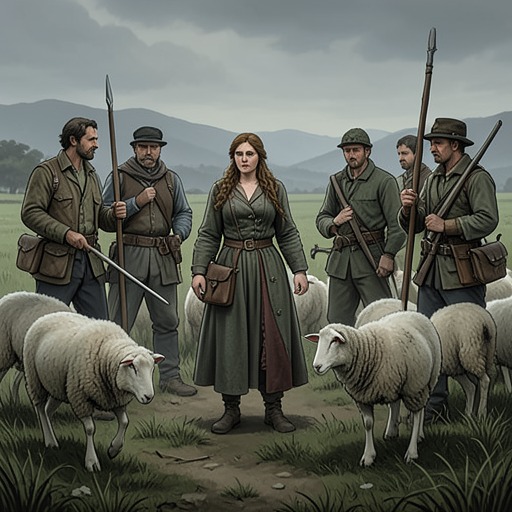
Other men also seek access. Miss Maple observes that Gabriel cannot keep his flock together and suspects that he sits watching the caravan because something important is inside, something that must not get out. The sheep name Eddie, Gabriel, Josh, Tom O’Malley, and Harry the Sinner among those who have tried to open it, along with a man in a quiet car. Their shared interest shifts the caravan from a background object into the centre of the flock’s investigation.
The suspicions have a local economic edge. Harry the Sinner fears that discovering drugs there would ruin plans for a dolmen attraction, pony rides, a Celtic cultural centre, whiskey specialities, and a seaside hotel. Tom O’Malley recalls George Glenn resisting tourist development and claims that boats brought illicit goods to the beach at night, that the goods were taken to the caravan, and that George Glenn drove away in his old car the next day. These are the men’s allegations, not a confirmation of the caravan’s contents. Their talk nevertheless exposes the contest gathering around the pasture: the caravan may represent concealed evidence to them, while the land around it is already imagined as a commercial asset.
George Glenn, Melmoth, and the Key
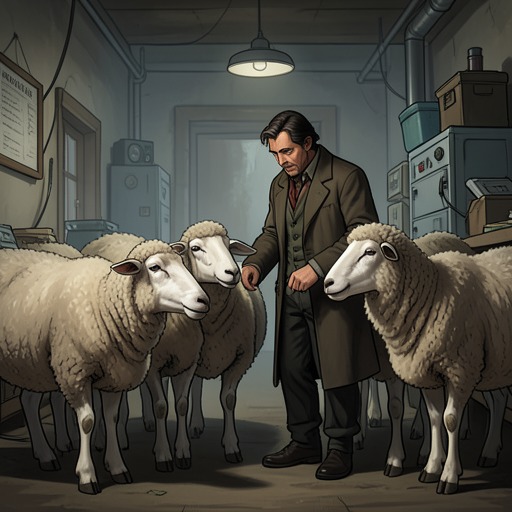
The caravan is connected to a separate key that George Glenn retrieves from Melmoth’s fleece. George Glenn finds a narrow thread buried deep beside the sheep’s throat, cuts it with a knife, and picks up the smooth, shining key when it falls. Melmoth remembers that George Glenn had tied it around his neck because he was the wildest of the flock. George Glenn leaves without looking back. This remembered act gives the key a history of closeness between shepherd and sheep, even as its later significance belongs to the flock’s broader search for what George Glenn kept hidden. The evidence does not establish that this is the key Gabriel later tries in the caravan’s lock.
Rebecca’s Return and the Caravan’s Changing Meaning
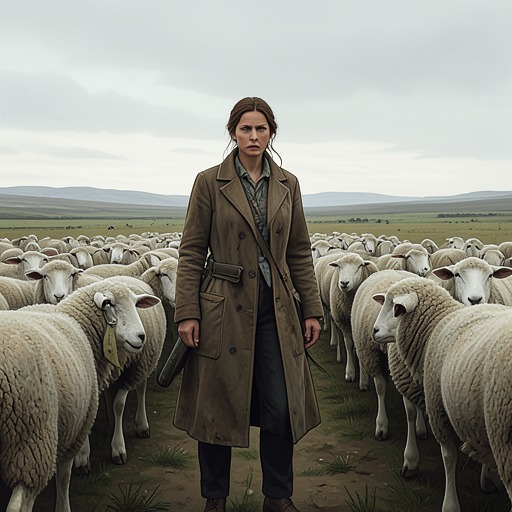
Toward evening, Rebecca arrives on foot with a small suitcase. George Glenn’s daughter and the flock’s new shepherdess, she says she will live in the caravan until they go to Europe and that she will not stay in the village any longer. She tries the door, attempts the windows, and works at the keyhole with a hairpin, but cannot get inside. Sitting on the top step with her head in her hands, she recalls to the sheep the solitary posture in which George Glenn sometimes sat there. They recognize her sadness; Melmoth hums into the wind. The locked place is not merely an obstacle to the flock’s inquiry: for Rebecca, it is the intended home from which she remains shut out.
Later, Rebecca reads aloud and then tells a story of a little girl with two fathers, one secret and one acknowledged. The secret father and daughter are fond of each other, quarrel, and remain estranged; when a letter finally offers a meeting before the father’s journey to Europe, the girl hides her joy and keeps him waiting, and he waits himself to death. The story places the caravan’s promise of Europe beside a painful account of lost time and a broken father-daughter bond. While Rebecca is distracted, Mopple the Whale eats the grass she has found under the dolmen from an open packet beside her. Her laughter at the discovery briefly changes the mood around the caravan, though it does not remove the sadness attached to her return.
The caravan also remains a point of nocturnal suspense. One night, while the sheep stay outside to graze and keep Mopple the Whale company as he sleeps, a powerful car approaches without lights. A man crosses the meadow, stops outside the caravan to sniff the air, climbs the steps, and knocks several times. The scene returns the locked door to the foreground: even after Rebecca has come to occupy the pasture, someone still approaches it secretly, and the narrative leaves the visitor’s purpose unresolved in this moment. The caravan thus gathers the novel’s contrasting claims on George Glenn’s place—sheep’s memory, Rebecca’s grief and intended home, and human pursuit of whatever may be concealed inside—without becoming an answer in itself.